The Secret Sauce of Spoken German
Modalpartikeln

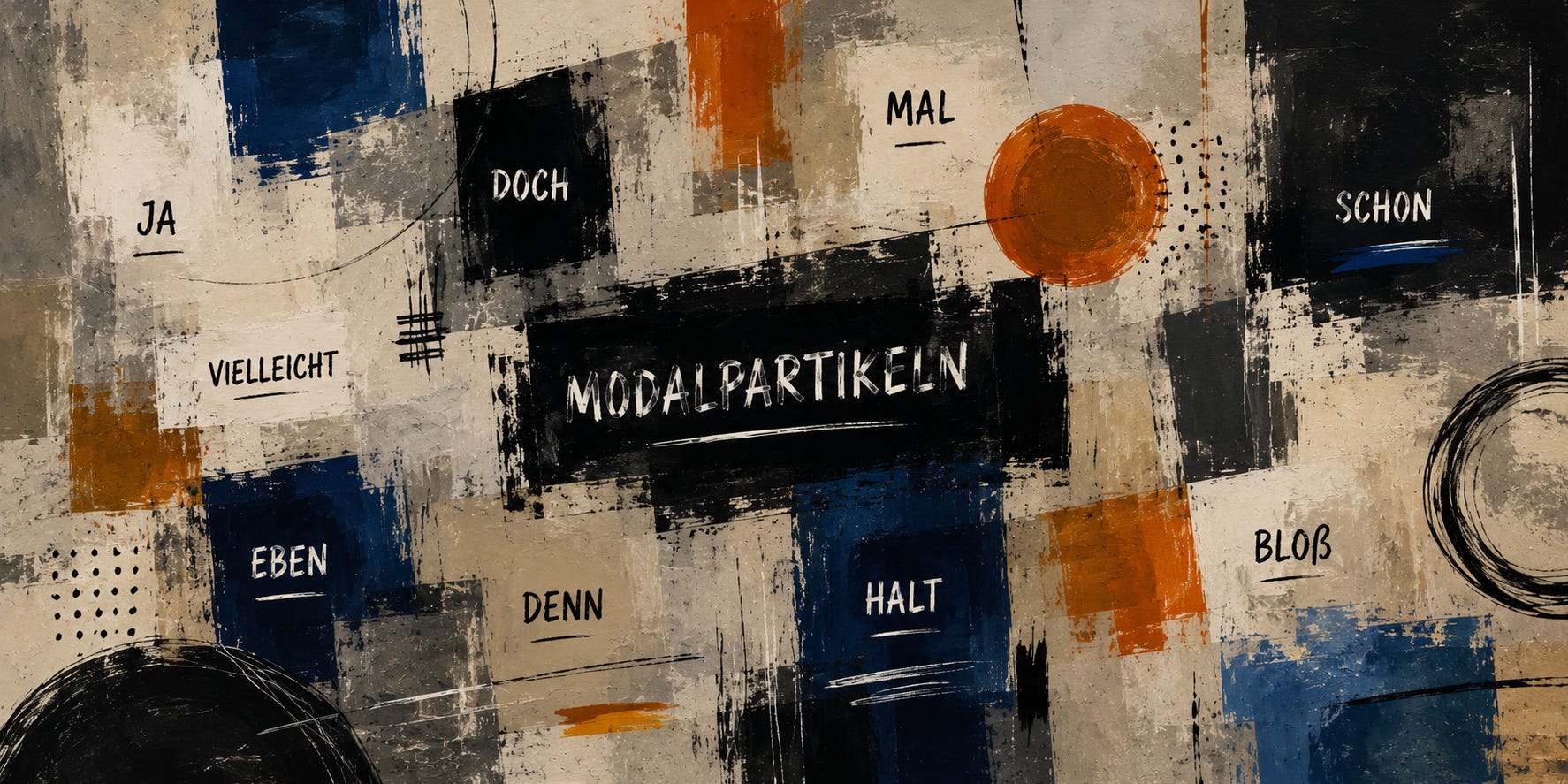
The secret sauce in one word: Modalpartikeln.
Tiny words like:
doch
mal
ja
denn
halt
eben
These words are used all the time in spoken German.
In fact, if you listen carefully to native speakers, you’ll hear them in almost every conversation.
What’s interesting is that they don’t usually add new information.
Instead, they change how the information is presented.
They show what the speaker thinks.
What they expect.
How they feel.
Whether they’re surprised, annoyed, impatient, resigned, friendly, or curious.
Think of them as emotional subtitles for German sentences.
Let’s take a simple example:
Komm her.
Komm doch mal her.
The action is identical.
In both cases, someone wants you to come closer.
But the implied feeling is completely different.
The first sentence sounds direct and potentially abrupt.
The second could sound softer, friendlier, and much more natural in everyday German.
This is why Modalpartikeln are so important.
Let’s look at some of the most common ones:
denn
Often used in questions to show surprise, curiosity, or interest.
Was ist das denn?
Without denn, you’re simply asking a question.
With denn, you’re showing that something surprises you or catches your attention.
Think:
“Wait... what’s that?”
rather than:
“What is that?”
doch
Probably the most powerful Modalpartikel.
It often reminds someone of information they should already know.
Ich war doch schon da.
The speaker is saying:
“But you know this already.”
It can also soften suggestions and requests:
Lies doch noch mal die Nachricht.
Instead of sounding like an order, it feels more like encouragement.
halt / eben
These are often used when accepting reality.
Deutsch ist eben schwer.
Das ist halt der Punkt.
The underlying message is:
“That’s just how it is.”
There’s often a sense of acceptance or resignation.
ja
Many learners know ja as “yes.”
But as a Modalpartikel, it means something different.
Ich war ja schon da.
The speaker assumes this information is already known.
It’s similar to saying:
“As you know...”
or
“Remember...”
mal
Also one of the most common words in spoken German.
Kannst du das mal machen?
The request immediately becomes softer.
Less direct and more conversational.
Check out the two dialogues I send out every week. Can you spot the modal particles?
I include them on purpose so you can get used to them in context and gradually develop an intuition for when and how to use them yourself.
LG und schöne Woche 💪
Marwan