
Hallo zusammen,
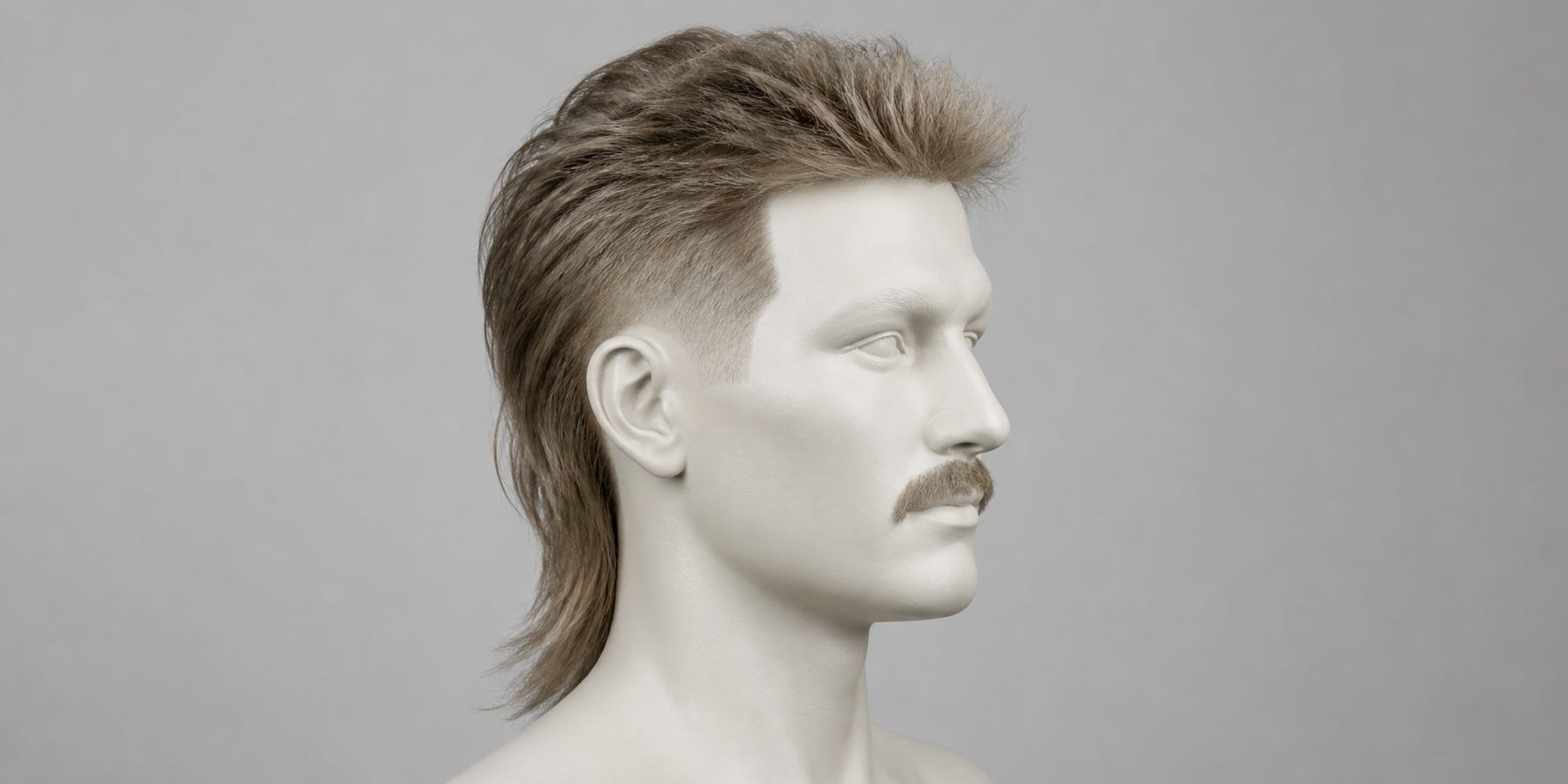
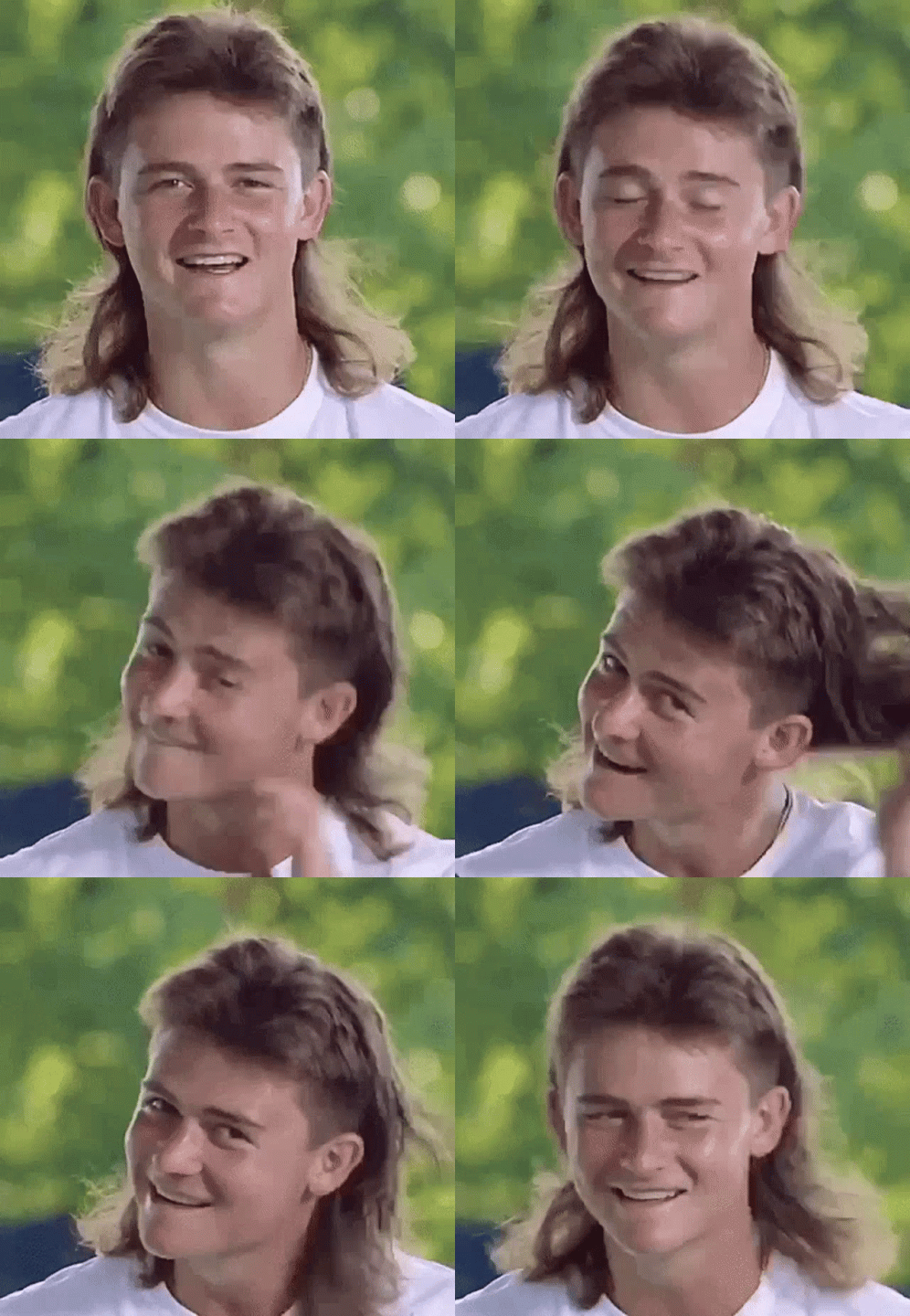
Today’s topic is the Vokuhila. The iconic haircut of the 80s and 90s. Vo Ku Hi La is Short for: Vorne kurz, hinten lang - short in the front, long in the back. Business in the front, party in the back.
What’s interesting is that this style was especially popular in East Germany, where there was often a push to feel modern and different in subtle ways… it’s making a comeback lately.
If you want to discuss things like this with others, feel free to join the subscriber chat - it’s free and you can access it right here 👇
Part 1 - Read 👀
Read the Dialogue (out loud if you can)
Mike: Martin. Was ist mit deinen Haaren passiert?
Martin: Gefällt's dir?
Mike: Das ist ein Vokuhila.
Martin: Ich weiß. Ich hab's extra so gewollt ⍟.
Mike: Ehrlich gesagt… steht dir das richtig gut. Das hätte ich jetzt nicht gedacht.
Martin: Hab ich dir doch gesagt. Der Friseur war auch erst skeptisch, aber dann meinte er, der kommt gerade voll zurück ⍟. Überall in Berlin sieht man das wieder.
Mike: Stimmt eigentlich. Ich hab das bei ein paar Typen gesehen und dachte, das ist Ironie. Aber das ist's anscheinend nicht mehr.
Martin: Gar nicht. Die Fußballer haben's wieder salonfähig ⍟ gemacht - Rüdiger, ein paar aus der Bundesliga. Und dann ziehen die Jungen nach, und plötzlich ist's ein Trend.
Mike: Dabei war der Vokuhila jahrelang das Symbol für schlechten Geschmack. Mein Onkel hatte den in den Neunzigern - mit Schnurrbart dazu. Das Foto hängt noch bei meiner Tante.
Martin: Genau das ist das Schöne daran. Der ist so lange uncool gewesen, dass er jetzt wieder cool ist. Das funktioniert immer so.
Mike: Schlechte Musik, schlechte Mode, schlechte Frisuren - alles kommt irgendwann zurück.
Martin: Und diesmal bin ich früh dran. Ich bin quasi ⍟ ein Trendsetter.
Mike: Du bist ein Mann mit einer fragwürdigen Frisur, der das gut findet. Aber ja - in dem Fall treff ich's wohl zu.
Martin: Danke. Ich glaub, das war ein Kompliment.
Mike: War es. Knapp ⍟, aber ja.
You just saw how people really talk about this. What comes next is the part that really matters: Now listen to the audio, understand the expressions, and use the writing and speaking practice to turn it into real conversational German and build your speaking confidence.

Part 2 - Listen 👂
Hear the Dialogue (switch to slow version if the original is too quick)
Audio 🎧
Slow Audio ⏳

Part 3 - Understand 💡
Read the explanations & translation (take your time, ask questions in the comments if something is unclear)
A) Explanations 💬
⍟ ich hab’s extra so gewollt – A spoken phrase used to clarify that something unconventional or surprising was a fully deliberate choice and not an accident, often said with a hint of defiance or pride in casual conversation. (English: “I did it on purpose” or “that was intentional”)
⍟ der kommt gerade voll zurück – A colloquial spoken expression used to describe something that is currently making a strong comeback in fashion, culture, or popular taste, common whenever trends and revivals come up in everyday conversation. (English: “it’s making a total comeback right now” or “it’s coming back in a big way”, literal: “it’s coming back really fully right now”)
⍟ salonfähig – An informal but widely used adjective describing something that has become socially acceptable or mainstream enough to be taken seriously, often used when talking about trends, opinions, or behaviour crossing from fringe to respectable. (English: “socially acceptable” or “mainstream”, literal: “fit for the salon”)
⍟ quasi – A very common spoken particle used to soften a claim or signal that something is approximately or effectively true without being exactly or officially so, slotted naturally into everyday speech across all registers. (English: “basically” or “kind of” or “almost”)
⍟ knapp – Used on its own or as a short spoken add-on to mean that something barely qualifies or only just applies, a compact and punchy way to acknowledge something while keeping a slight reservation intact. (English: “just about” or “barely” or “but only just”, literal: “tight” or “close”)
B) Translation 🔄
Mike: Martin. What happened to your hair?
Martin: Do you like it?
Mike: That's a mullet.
Martin: I know. I did it on purpose.
Mike: Honestly… it actually really suits you. I wouldn't have expected that.
Martin: Told you. The hairdresser was sceptical at first too, but then he said it's making a total comeback right now. You see it all over Berlin again.
Mike: That's actually true. I'd seen it on a few guys and thought it was ironic. But apparently not anymore.
Martin: Not at all. The footballers made it mainstream again - Rüdiger, a few from the Bundesliga. And then the younger guys follow, and suddenly it's a trend.
Mike: And yet the mullet was the symbol of bad taste for years. My uncle had one in the nineties - with a moustache to go with it. The photo is still up at my aunt's place.
Martin: That's exactly what's great about it. It was uncool for so long that it's cool again now. It always works like that.
Mike: Bad music, bad fashion, bad haircuts - everything comes back eventually.
Martin: And this time I'm early. I'm basically a trendsetter.
Mike: You're a man with a questionable haircut who's happy about it. But yeah - in this case I'd say that's fair.
Martin: Thanks. I think that was a compliment.
Mike: It was. Just about, but yes.
Part 4 - Write ✍️
Writing Practice (don’t skip, writing trains your brain to actively form sentences, and this carries over into speaking)
Answer ONE of these:
Kennst du ungewöhnliche oder typische Frisuren-Trends? Beschreibe ein Beispiel.
Warum kommen manche Trends nach vielen Jahren wieder zurück?
Welche Rolle spielen Mode und Stil für deine persönliche Identität?
Send me your text by replying to this email, and I will answer + give feedback to the first 20 replies!
(check your spam folder just in case)
💬 Alternatively:
Post your answer in the comments.
(you are more likely to get feedback)
Part 5 - Speak 🗣️
Spoken Conversation Practice 🗣️
Have a short 5-minute conversation with your KI Sprachbuddy. This is your real speaking training. You can talk about today’s topic, or choose something else.
I suggest talking about ONE of these topics:
Kennst du ungewöhnliche oder typische Frisuren-Trends? Beschreibe ein Beispiel.
Warum kommen manche Trends nach vielen Jahren wieder zurück?
Welche Rolle spielen Mode und Stil für deine persönliche Identität?
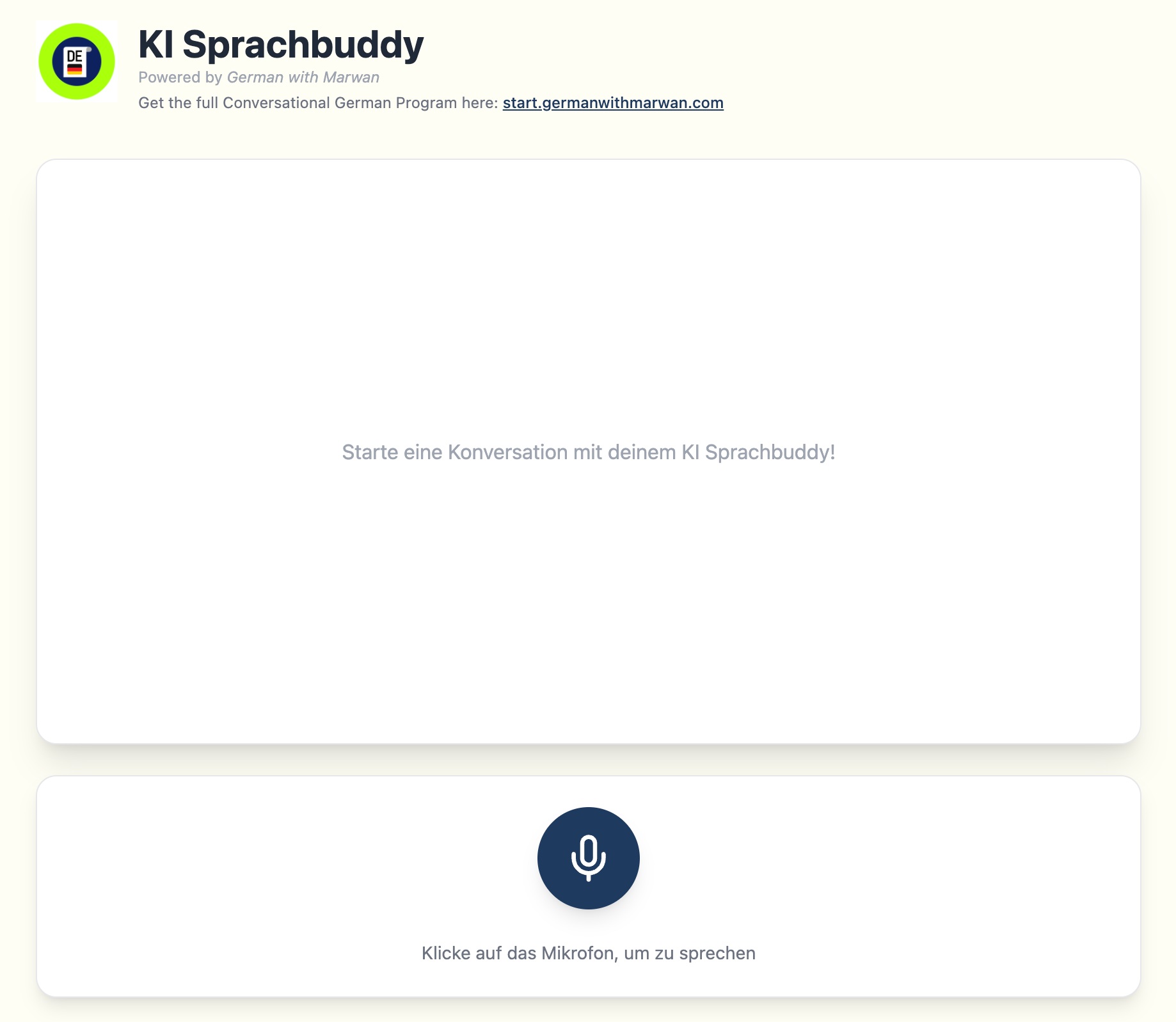
Access required 🔐 To use the KI Sprachbuddy, please enter the password below.
I update it occasionally for security. For the most up-to-date password, please check your latest email.
Password: Deutsch123
Wer könnte das heute noch tragen? 😏
Send it to someone who could actually pull this off 😄
And if you enjoyed it, tap ♡ and share it. Some styles… and some conversations… deserve a comeback.
LG
Marwan