Hallöchen zusammen.
And a warm welcome to all the new readers who joined recently, there have been quite a few of you lately.
If you’re new here, feel free to browse through the archives and explore some of the past dialogues. And if there’s a topic you’d love to see covered, don’t hesitate to leave a comment or send me a message.
In fact, today’s topic was suggested by one of you, which I always really enjoy. So keep the ideas coming!
Deutsch-französische Rivalität 🇫🇷
Audio 🎧
Slow Audio ⏳
Dialogue 💬
Hans: Weißt du, François, ich finde diese deutsch-französische Rivalität eigentlich ziemlich faszinierend. Wenn man sich die Geschichte anschaut, haben unsere Länder ja jahrhundertelang miteinander gerungen ⍟ – politisch, militärisch, kulturell.
François: Ja, absolut. Allein schon die Region Elsass-Lothringen zeigt das ganz gut. Mal gehörte sie zu Frankreich, mal zu Deutschland. Für viele Familien dort hat sich die Staatsangehörigkeit geändert, ohne dass sie umgezogen sind.
Hans: Genau. Und dann natürlich die beiden Weltkriege. Da standen sich Deutschland und Frankreich direkt gegenüber. Wenn man das bedenkt, ist es eigentlich erstaunlich, wie eng unsere Länder heute zusammenarbeiten ⍟.
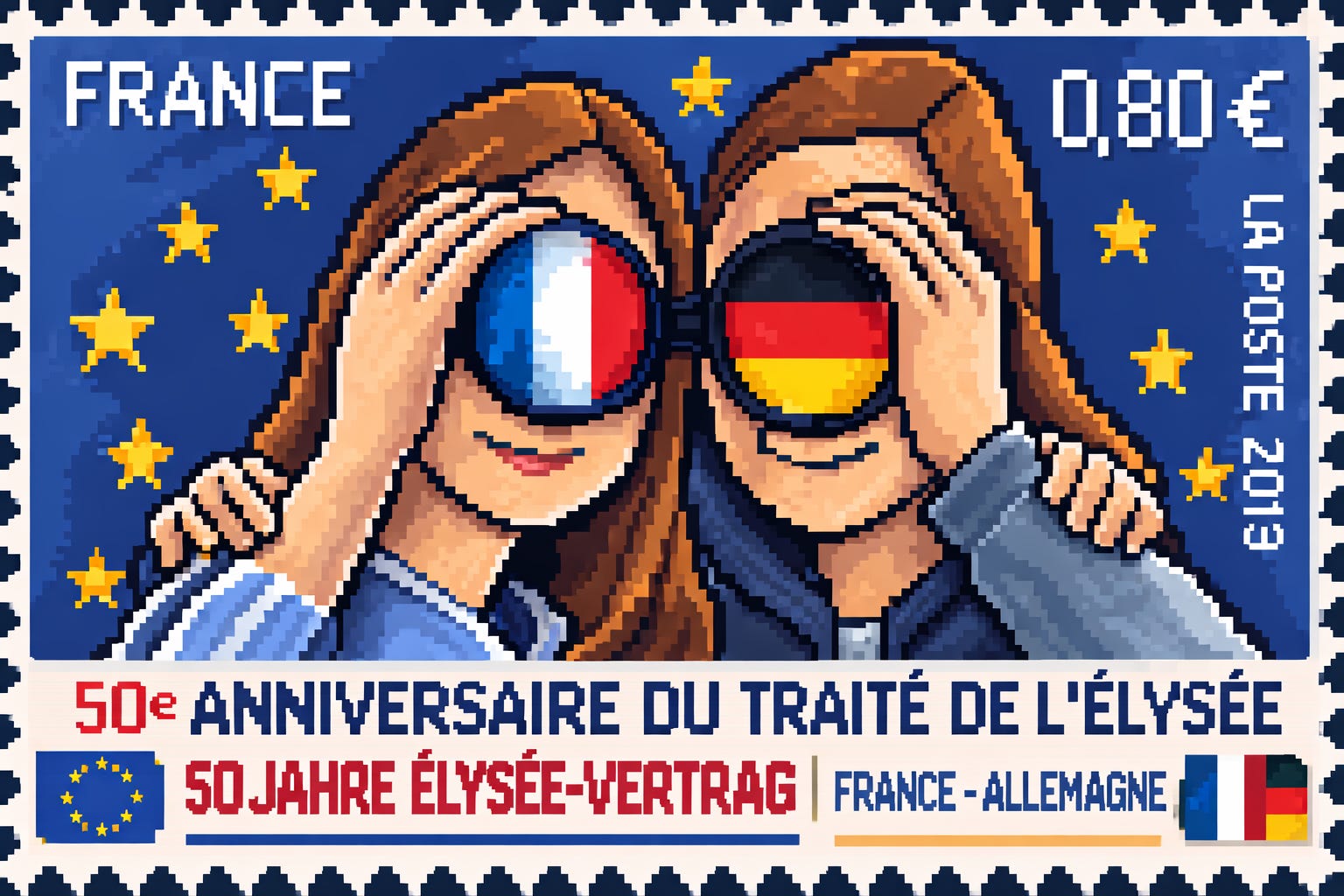
François: Das stimmt. Nach 1945 haben viele Politiker bewusst versucht, aus Rivalität Zusammenarbeit zu machen. Der Élysée-Vertrag in den sechziger Jahren war da ein wichtiger Schritt.
Hans: Ja, Adenauer und de Gaulle. Die Idee war im Grunde ⍟: Wenn Deutschland und Frankreich miteinander arbeiten, stabilisiert das ganz Europa.
François: Und irgendwie funktioniert das bis heute. Wenn sich Deutschland und Frankreich einig sind, bewegt sich in Europa meistens etwas ⍟.
Hans: Ich finde interessant, dass unsere Länder trotzdem sehr unterschiedlich denken. Frankreich ist oft politischer, zentraler organisiert. Deutschland ist eher föderal und wirtschaftlich geprägt.
François: Vielleicht ist genau das der Punkt. Zwei verschiedene Perspektiven, die sich ständig reiben ⍟.
Hans: Wie zwei Zahnräder.
François: Genau. Wenn sie sich drehen, entsteht Bewegung.
Hans: Dann ist die Rivalität vielleicht gar kein Problem, sondern eher… ein historischer Motor.
François: Ja. Ein Motor, der Europa ziemlich stark geprägt hat.
Explanations 📖
⍟ miteinander ringen describes a long and intense struggle or competition between sides and is used in political, historical or metaphorical contexts, neutral register (English: “to struggle with each other”, literal: “to wrestle with each other”).
⍟ wie eng unsere Länder heute zusammenarbeiten emphasizes close cooperation between groups or institutions and is often used when contrasting past conflict with present collaboration, neutral register (English: “how closely our countries work together today”, literal: same meaning).
⍟ die Idee war im Grunde introduces the core intention or simple principle behind something and is common in explanations or summaries, neutral spoken register (English: “the basic idea was”, literal: “the idea was in the ground/basically”).
⍟ bewegt sich in Europa meistens etwas means that political progress or decisions often follow when certain actors agree and is commonly used in political discussion, neutral register (English: “something usually starts moving in Europe”, literal: “something moves in Europe”).
⍟ sich reiben refers metaphorically to different ideas or perspectives interacting through friction or debate and is used when discussing intellectual or political differences, neutral register (English: “to rub against each other / to clash”, literal: “to rub against each other”).
Translation
Hans: You know, François, I actually find this Franco-German rivalry pretty fascinating. When you look at history, our countries struggled with each other for centuries politically, militarily and culturally.
François: Yes, absolutely. The region of Alsace-Lorraine shows that quite well. Sometimes it belonged to France, sometimes to Germany. For many families there, their nationality changed without them ever moving.
Hans: Exactly. And then of course the two world wars. Germany and France were directly opposed to each other. When you think about that, it’s actually remarkable how closely our countries work together today.
François: That’s true. After 1945 many politicians consciously tried to turn rivalry into cooperation. The Élysée Treaty in the 1960s was an important step.
Hans: Yes, Adenauer and de Gaulle. The basic idea was: if Germany and France work together, it stabilizes all of Europe.
François: And somehow that still works today. When Germany and France agree, something in Europe usually starts moving.
Hans: I find it interesting that our countries still think quite differently. France is often more political and centrally organized. Germany is more federal and economically oriented.
François: Maybe that’s exactly the point. Two different perspectives constantly rubbing against each other.
Hans: Like two gears.
François: Exactly. When they turn, movement is created.
Hans: Then maybe the rivalry isn’t really a problem but rather… a historical engine.
François: Yes. An engine that has shaped Europe quite strongly.
Anderes Thema… 😄
Ready? Let’s practice.
Part 1 – Fill in the blank 🧩
Complete the sentence with the missing expression from the dialogue.
Deutschland und Frankreich haben lange politisch ______.
struggled with each otherWenn man die Geschichte kennt, sieht man ______ heute zusammenarbeiten.
how closely they cooperate______ ganz einfach: Zusammenarbeit statt Konflikt.
the basic ideaWenn diese beiden Länder sich einigen, ______ in Europa meistens etwas.
things start movingZwei verschiedene Perspektiven können sich manchmal ______ und neue Ideen erzeugen.
to clash / rub against each other
(You’ll find the answers below 👇)
Part 2 – Translation 🔎
Translate the following sentences into English.
Deutschland und Frankreich haben lange miteinander gerungen.
Heute arbeiten die beiden Länder eng zusammen.
Die Idee war im Grunde, Stabilität für Europa zu schaffen.
Wenn sich beide Länder einigen, bewegt sich politisch oft etwas.
Unterschiedliche Perspektiven können sich gegenseitig beeinflussen.
(You’ll find the answers below 👇)
Kennst du auch jemanden aus Frankreich, der Deutsch lernt?
If someone came to mind while reading this, feel free to send them this edition.
Some friendly Franco-German rivalry is always more fun when both sides are present.
LG
Marwan


